

What the Buc-ee’s Lawsuit Teaches Small Businesses About Logo Design
The Buc-ee’s vs Mickey’s Logo Comparison
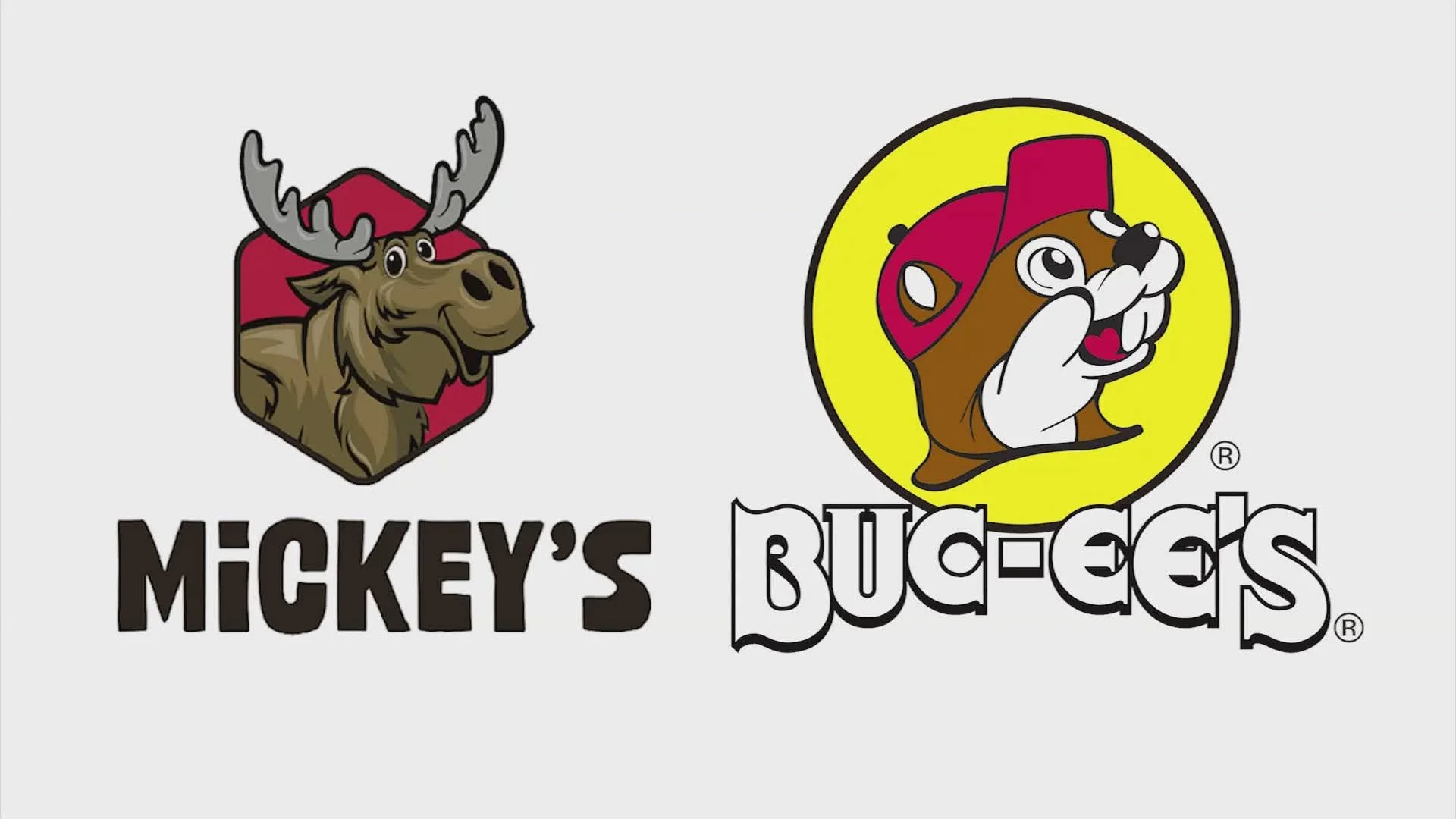
Side-by-side comparison of the Buc-ee’s and Mickey’s logos referenced in the current trademark dispute. Image used for educational commentary on branding and logo design.
Recent reports show Buc-ee’s filed a federal trademark lawsuit claiming the Ohio-based Mickey’s convenience store chain adopted a logo that could confuse customers because of similarities to the company’s well-known beaver mascot.
If you’ve been on social media lately, you’ve probably seen people arguing about the Buc-ee’s lawsuit involving another convenience store chain and their mascot logo. Some people think it’s ridiculous. Some people think it’s justified. But the real lesson here isn’t about whether one cartoon animal looks like another.
The real lesson is about how important brand protection actually is, especially for small businesses that are just getting started. From a graphic designer and business owner standpoint, there are a few things worth talking about.
Looking at the Logos from a Designer’s Perspective
When you put the logos side by side, I don’t necessarily see one directly copying the other. What I see is something that happens all the time in branding. They’re both built around a very similar concept structure.
You have:
• An animal mascot
• A geometric shape behind it
• Playful typography
• Bright colors designed to catch attention
That type of formula works well for convenience stores and family friendly brands because it’s easy to recognize and easy to remember. But having a similar concept doesn’t automatically mean the artwork itself is identical. It’s kind of like comparing apples and oranges. They’re both fruit, but they’re still different.
For example, the Mickey’s illustration has shading and highlights, while the Buc-ee’s logo is a flatter cartoon style. The Mickey’s typography is also easier to read at a glance. So visually there are differences. But lawsuits like this usually aren’t about whether something is identical.
They’re about whether the overall impression of the brand could confuse customers.
Why a Big Brand Would Go After Something Like This
From a business owner perspective, protecting your brand is serious. You don’t want another company using branding that makes people think they’re connected to you, endorsed by you, or operating under your brand. A brand should feel consistent and recognizable. If similar branding starts appearing in the same space, it can weaken that identity. There’s another reality most people don’t think about.
Big companies actually have to defend their trademarks aggressively. If they don’t, it can make it harder to protect those trademarks later. That’s why you see companies like Disney or Dr. Seuss go after things that might seem small on the surface. Sometimes the goal isn’t just stopping one company.
It’s setting an example so others don’t get too close. Even if it feels like overreach, it’s often about protecting the brand long term.
Where Small Businesses Accidentally Get Into Trouble
This is where I see problems happen all the time. Most business owners aren’t trying to copy anyone. But they do skip important steps early on. One of the biggest mistakes is not doing enough research before committing to a brand idea.
Before settling on a logo concept, you should:
• Search Google for similar logos
• Look through multiple pages of image results
• Check the USPTO trademark database
• Look at competitors in your industry
Another issue is relying too heavily on templates, stock graphics, or AI generated designs.
And yes, that includes platforms like Canva. A lot of people assume that if they build a logo inside Canva, they automatically own it and are protected. That’s not always the case.
Many of those graphics are shared assets that thousands of other businesses can access and use. Even if you customize it with your business name, the underlying artwork might not be exclusive to you. That doesn’t mean Canva is bad. It’s a useful tool for a lot of things.
But when it comes to building the actual identity of your business, relying on a template or stock graphic can put you in a risky position. Design has been around a long time. Inspiration exists everywhere. There’s rarely a completely new idea anymore. But what makes a brand original today is how those influences are combined and developed into something unique to the business.
That’s where strategy comes in.
The Real Cost of Cutting Corners
One of the biggest misconceptions with logos is that they’re just a small graphic. In reality, your logo ends up everywhere.
It shows up on:
• Signs
• T-shirts
• Vehicle wraps
• Business cards
• Packaging
• Menus
• Advertising
• Websites
• Social media
• Video and animation
I’ve seen businesses invest thousands of dollars into signage, marketing, uniforms, and packaging only to realize later that their logo wasn’t actually original or protected.
Now imagine getting a cease and desist letter after all that. You’re not just changing a graphic. You’re replacing your entire brand everywhere it exists. That’s where the real cost shows up.
How Small Businesses Can Avoid This
If you’re starting a business or creating a new brand, a few simple steps can help prevent problems later.
Start with a basic search
Google your concept idea and see what already exists. Look through multiple pages of results.
Check the USPTO database
This helps identify trademarks that may already be registered.
Work with an experienced designer
Someone who understands branding strategy can help you navigate originality, concept development, and research.
Pressure test your idea
If your concept is the very first thing that comes to mind for your industry, chances are a lot of other people had the same idea.
Consult a trademark attorney
Once your brand is finalized, an attorney can help you register your trademark and make sure everything is protected properly.
Final Thoughts
I’m not a trademark attorney. But as a graphic designer and business owner, these are things I think about every day when helping businesses build their brand. A logo isn’t just something that looks good. It’s the identity of your business. Cutting corners might save a little money at the beginning, but it can create bigger problems later if your brand isn’t original or protected.
Taking the time to build it intentionally usually ends up being the better investment.
Thinking About Your Own Logo?
If you’re starting a business or thinking about updating your logo, it’s worth making sure the brand you’re building is something you can grow with confidently. When I work with businesses, the goal isn’t just to create a graphic. It’s to build a brand that’s original, flexible, and built with long term use in mind. If you have an idea for a brand and want a second opinion on it, feel free to reach out. Even a quick conversation can help you avoid problems down the road.
Jay Odom Design
📞 731-707-1406
🌐 www,jayodomdesign.com

Sources
United States Patent and Trademark Office
Tennessee Secretary of State – Trademark Registration
https://sos.tn.gov/businesses/guides-and-resources/trademark-and-service-mark-registration
Houston Chronicle